Showing posts with label Music. Show all posts

Friday, February 6, 2015

Exploring Sounds- Auditory Skills


This week at home, for pre-school, I thought an exciting theme for discovery would be Exploring Sounds. There are a variety of auditory skills that are important to develop and can be learned and practiced through numerous enjoyable games. I use these games during music therapy evaluations to get an idea of any auditory sensory issues that might be going on with my students. 

Audition is the physical act of hearing or receiving sound).  It is passive and involuntary.  The ear is the transmission system and sends the information to the brain in a few areas including the auditory cortex and the pre-frontal lobe. The brain is "suppose to discard un-needed auditory information after evaluating its safety and informational features (Berger, 87).  The way we receive and process sound of course affects the way we receive and express language. 

The games we played this week include 

  • auditory discrimination 
  • sound localization
  • depth perception

Auditory discrimination is needed to tell the difference between sounds.  We can determine with this skill that language sounds are different than other sound effects like animals and machinery. We can also tell the difference between letter sounds like an "F" sound and an "S" sound. Sound localization is determining where a sound is coming from and depth perception tells us how far away or close it is. The absence of this skill can be a safety problem in situations like crossing a street. 

Auditory Discrimination

Game Number 1
I placed 4 different sounding instruments on the floor on one side of a wall where I was sitting. On the other side of the wall I placed the exact same instruments where my daughter sat. I sang a tune which I got from my supervisor with instructions to listen and then play what is heard.  The instruments included a drum, a maraca, a tambourine, and rhythm sticks. 


After she was successful at determining which instruments I was playing by listening I gave her a few more instruments to choose from.  These instruments required listening a little closer due to some of the new instruments sounding more similar to others such as the claves vs. the rhythm sticks and the tambourine vs. the bells.  With practice she was able to learn these too. 


Game Number 2
We also played a very simple auditory discrimination game by having her listen to sound effects I found on Spotify and having her guess what they were.  Some examples included birds, a fire truck, the ocean, etc. 


Sound Localization and Depth Perception
In this game I used my Bluetooth speakers and the music on my phone to play Music Hide and Seek. I hid the speakers while my daughter hid her eyes. When it was hidden I hit "play" on my phone and music played from the speakers.  She followed the sound to where she thought she heard it coming from, determining the direction (sound localization) and how far away it was (depth-perception). She took turns having me find it too. Even though she found it every time, she still asked me how I knew where it was. :) 


There are many other skills we did not do that include

  • Auditory figure-ground- what we hear in the foreground while putting non-important sounds in the background. 
  • Auditory focus- What one choose to listen to in a soundscape
  • blending of sounds-putting sounds together to form words and sentences.
  • Auditory tracking- The brain following and keeping track of a sequence of sounds.


Berger, D.S. (2002).  Music Therapy, Sensory Integration, and the Autistic Child.  Routledge.

Tuesday, January 22, 2013

Jingle Bells


Adelyn is very proud of these jingle bells that she brought home from MDO and her favorite thing to do of course is to take them off of the handle and shake them while singing her favorite tunes. These bells are hanging on our pantry door (nice benefit of hearing when the pantry is opened haha...like if you know your husband is sneaking the best goodies).  

These are made with yarn, white glitter/sprinkles, egg crates, and 3 jingle bells (hidden under the egg crates).

  • Poke a hole in the bottom of the 3 egg crates and turn upside down.
  • Tie one jingle bell to one end of the yarn.
  • String the yarn through 1 egg crate
  • Pick a spot further down the yarn for the second bell and egg crate.
  • Tie yarn to jingle bell and then put egg crate on top.
  • Pick your last spot for the last jingle bell and tie to yarn.
  • Put last egg crate on top.  
  • Pick a spot in the yarn to make a knot for the loop.


Saturday, January 19, 2013

Brushing Little Teeth


This is a video of Adelyn singing "aaahs" to the tune of the ABC's while I brushed her teeth.  This great idea comes from one of a kind, Tricia Eilers, MT-BC.  She showed me the wonderful trick of  singing "ahh" sounds to get a toddler to keep his or her mouth open while brushing teeth. I had been singing to her myself which worked sometimes but she still closed her mouth at times while listening.

In this video Adelyn is singing an "ah" sound to the tune of the ABCs and also singing an "ee" sound while putting her teeth together while she imitates me singing the solfege Do Mi Sol Mi Do and another vocal exercise (just for fun!)  Be ware, I wobbled on the pitch a couple of times.  

Worked really well for us.  Just pick their favorite song and sing a few ahhs and ees.  Thanks Tricia!

Thursday, July 12, 2012

Gabby's Voice through MT


I was browsing through Youtube music therapy videos for my own continuing education and ideas when I came across a 3 part segment of Gabby Giffords in speech therapy and music therapy at The Institute for Research and Rehabilitation in Houston. I had the privilege of observing Meagan Morrow, MT-BC, NMT for the day during the time I was studying music therapy at Sam Houston State University. She is, by the way a phenomenal music therapist. She has a great understanding of how the rehabilitation works, has great rapport with her clients and is a great musician as well. 


This second video shows Mrs. Giffords first during speech therapy and the frustration that comes with having to re-learn speech especially when she is aware of her loss (expressive aphasia which is where she understands language but cannot express it). It then shows the speech pathologist encouraging her to sing a familiar song which follows with Mrs. Giffords singing an entire verse (whereas before she struggled to say one word). It also shows the music therapist and speech pathologist working together to help her succeed. This is a fantastic example of the benefits of music therapy in the area of rehabilitation.  


"Why is it that someone who can't speak, can sing?" 


"Because music is accessed in many areas of the brain, that aren't designated for language", Meagan responded. "We're retreving pitch, melody,rhythm, through all of these different areas and those are working to get your language back".


Language is generally held in the left hemisphere of the brain however music is in both hemispheres as stated in the video.  Therefore music therapy can re route or re-build language through different pathways such as those on the right side of the brain.

Meagan also gives a great analogy of being on the freeway when you are stuck in traffic/at a road block.  If you cannot go that way you can go around and still get to your destination.


Music therapy is not only limited to this type of setting and benefits. Music therapy can enhance motor skills, cognition/memory, communication, and social/emotional skills as well.


Please visit my page "Music Therapy" which is found on the toolbar just below the header to learn more about this amazing service.

Friday, January 13, 2012

Family Play and Learn


Family. We live in the same house. We surround each other all the time. We're stuck together! There are plenty of fun activities, play and learn style, that can be set up to teach children about their own families and how they are an important member. We came across several great books that show the wide variety of families here in our society and around the world.   Some children may know that they are unique but may not know that every family is too.


Here's the activities we had fun doing to learn about families! Some we came up with and some I found on Pre-School-Plan-It

Books
                   
Love is a Family by Roma Downey
A little girl is disappointed because her family is not like her neighbors family and they other kids in her class.  At family night at school she realizes that there are a large variety of families and none of them are exactly the same.  
         
  
A Family Like Yours by Rebecca Kai Dotlich Illustrated by Tammie Lyon


Me and My Family Tree by Joan Sweeney Illustrated by Annette Cable
A little girl explains how she is related to people in her family and extended family.
               
 
Mother's Day by Anne Rockwell Illustrated by Lizzy Rockwell
A story about what different kids in a class plan to do for their mothers on mother's day based on different traditions they have in their own home.


Molly's Family- by Nancy Garden
Molly learns that it's okay that she has two moms.


Are You My Mother? by P.D. Eastman


I Like Myself by Karen Beaumont


Music
In a House by Signing Time
Lean on Me by Bill Withers/Club Nouveau Listen on You Tube
Two Worlds- Phil Collins Listen on You Tube
The Family song- Listen and Watch on You Tube

Dramatic Play

  • Play House! (One of Zachary's favorite games.  He loves to play that one of us lives in Amarillo which is where Scott's parents live, and the other comes to visit with our dogs and babies whom all talk).
  • Make a baby bath center- I pulled out our old baby bathtub, washcloths, empty lotion/baby soap bottles, a brush/comb. 
  • Block houses- Design houses built out of blocks.
  • Make houses/huts out of cardboard boxes. You can use just one, make a tunnel with several or create something unique!
Art/Crafts
  • Draw a picture of your family.
  • Make a family tree. Paint a tree on paper and glue pictures of family members on it. This can also be made into a place mat.
  • Family Collage- Make a collage of the family using photos! 
  • Family Hand Print Chain-trace everyone's hand prints and write special things about each person on their hand print.
  • Make paper doll clothes-Design them to represent what each family member would like to wear.
  • Family Popsicle Sticks- Print full length pictures of each person , cut them out and glue on Popsicle sticks. 
  • Pictures from shapes-Have shape cut outs and put them together to make different structures.
  • Noodle Art- Glue noodles on drawings of houses. Paint the noodles different colors or dye them ahead of time with food coloring.
  • I Like Poster- Cut out things from magazines that each family member likes. PreSchool-Plan-It
Activities
  • Make a memory game using pictures of family and extended family members.
  • Finish the Sentence- We made a page with sentences starting with "I love my family because" and filled the page.  
  • Animal Babies- Learn the names of the different types of babies for each animal using pictures and discussion.  PreSchool-Plan-It
  • Feelings Discussion- One way to get kids talking about feelings is to have them finish the sentence such as this, "I feel happy when _____", etc.  Examples of emotions used can be sad, silly, scared, excited, joyful.  PreSchool-Plan-It
  • Finger Print Examination- Use paint to make finger prints on paper and examine them with a magnifying glass.  Compare with other finger prints to see how each one is unique. PreSchool-Plan-It
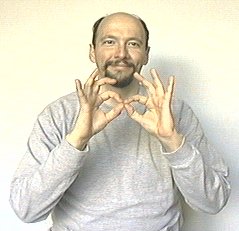
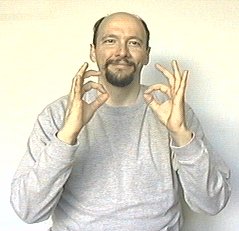
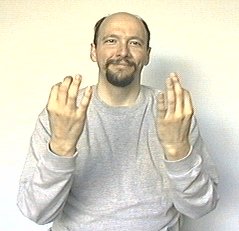
ASL for "Family" -Lifeprint.com


Tuesday, March 8, 2011

Musical Instruments

Books
  • Learned about different notes with posters

Music
  • Instrument Exploration
  • Djembe showing
  • Clarinet demonstration
Art
  • Painting music notes with stamp paints
Wish I planned more for this week but it didn't happen.

Monday, August 9, 2010

Little REaD Wagon- San Antonio Libraries

A branch of the public library called Little REaD Wagon has been doing a Play and Learn series at the library we usually go to, the Guerra library, to encourage early literacy. These ladies travel around to different libraries throughout the year to do their series. We were not able to make all of them, but we did go 4 different Fridays.

The topics they offered were:
  • What is early literacy?
  • What is print awareness?
  • What is letter knowledge?
  • What is phonological awareness?
  • What are narrative skills?
  • What is print motivation?
  • Why is vocabulary important?
  • What other resources are available?
Each day we attended began with reading a book as a large group and then going off to play with the resources they brought. Some examples of activities are listed below. Most activities had books to read that were related.

1. A sound garden for phonological awareness- hanging pots, pans, and kitchen items on strings for the children to play on.

2. Music instrument exploration- for phonological awareness


3. Writing letters and putting them in a mail box (they did not have to know letters or have skills to write) for print motivation

4. Making play doh with a recipe for print motivation

5. Using tongs to pick up small items to practice fine motor skills for print motivation


6.. Finger painting for vocabulary

7. Planting a lima bean in a pot for vocabulary

8. Looking at pictures from magazines, etc on the wall with a magnifying glass for vocabulary

9. Playing with book character cut outs on a sticks while reading a book.

10. Digging for dinosaurs for vocabulary

11. Playing with baby dolls and learning to care for them for vocabulary

12. Making large bubbles


13. Puzzles


All of the activities were things that are easy to be done at home.


Monday, February 8, 2010

Musical Instruments

January 25-29

Books- Musical Instruments: A First Discovery Book by Scholastic

Crafts- Coffee can drum, shaker out of play doah can

  • Click here for instructions on the coffee can drum. Very easy!


Music- All kinds! Music Together CD- Playing in the Kitchen and Biddy Biddy song.

Activities- Instrument exploration with instruments, Instrument Exploration with kitchen items.

Science- Filling glasses with different amounts of water to hear the change in pitch.


Exploring Sounds!


Daddy Plays a Song!


Playing My Guitar while watching TV

Blog Archive